
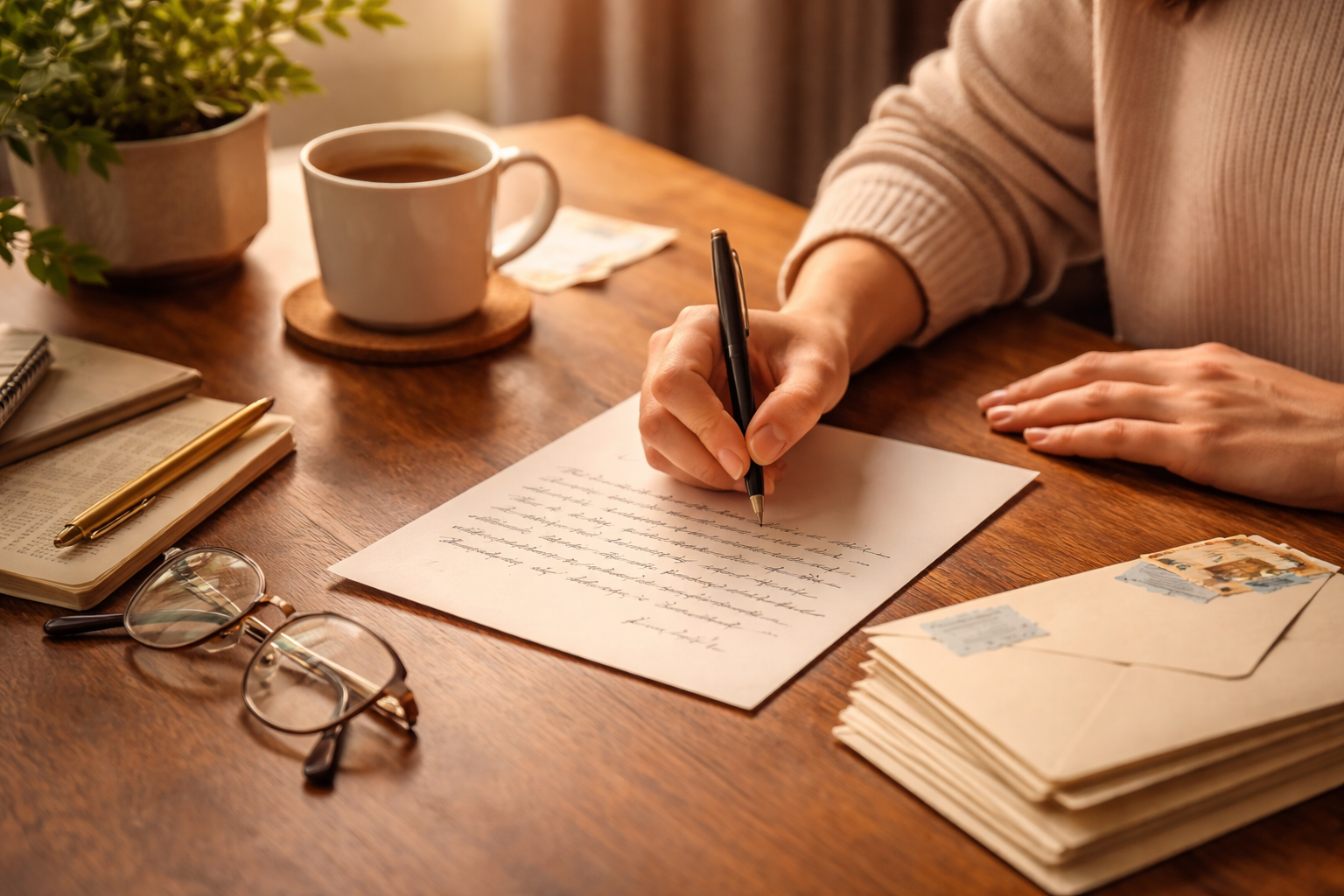
When a relationship changes, one of the hardest questions is often not just what should be said, but how it should be said.
People going through separation, divorce, or a living-apart relationship often ask the same kinds of questions: Should communication be in writing? How do I keep things calm? What if children are involved? How do I say something serious without making things worse? Family-law and separated-parent guidance shows these are common concerns, especially where communication can easily become emotional or conflict-heavy.
There is no single perfect medium for every situation. Phone calls, in-person conversations, emails, and messages can all have their place. But for some types of communication, especially when the topic is sensitive or important, a physical letter offers something unique: more thought, more formality, more space, and often a clearer sense of intention.
This guide answers the questions people commonly ask and explains where physical letters can be especially helpful.
Why does the method of communication matter during separation or divorce?
Because the medium affects the tone, speed, and structure of the conversation.
In family disputes, written correspondence remains a main method of communication, and professional guidance stresses that its impact can be significant. Resolution specifically advises considering who the recipient is and what you hope to achieve before sending correspondence. Cafcass guidance also emphasizes communication that reduces conflict and keeps focus on children’s needs where children are involved.
That is why the method matters. Some forms of communication are fast and practical. Others are better for carefully phrased, more reflective communication. A physical letter can be useful when the goal is not speed, but clarity and thoughtfulness.
Should important separation or divorce communication be in writing?
Often, written communication is helpful because it creates clarity and reduces the chance of a conversation being forgotten or misremembered.
Resolution’s guidance explicitly notes that written correspondence, including letters and emails, is still a main method of communication in family disputes. Cafcass also provides written planning tools such as Our Child’s Plan, which helps separated parents agree practical arrangements in writing.
A physical letter is one form of written communication that can feel more deliberate than a quick message. It may be especially suitable when you want the communication to feel more measured, more carefully framed, or more respectful in presentation.
What is unique about a physical letter in this situation?
A physical letter changes the pace and feel of the exchange.
It usually takes more intention to write and send. It arrives as a standalone communication rather than as one more notification in a crowded inbox or message thread. That can make the message feel more thoughtful and more substantial.
The unique strengths of a physical letter often include:
- a more deliberate tone
- a calmer pace
- clearer presentation
- a stronger sense of formality when needed
- something tangible that can be kept and reread
- a more memorable impression than a quick digital exchange
That does not mean other methods are bad. It simply means that a posted letter can be especially well suited to moments where care, presence, and reflection matter.
Can a physical letter help keep communication calmer?
Sometimes, yes.
One of the most useful things about a physical letter is that it naturally slows communication down. Guidance for separated parents repeatedly stresses the importance of not reacting in ways that escalate conflict and of maintaining positive or neutral communication where possible. Cafcass advises parents not to mirror negative behaviour, while family-law guidance also recommends stepping back when communications become heated.
A posted letter creates more space between reaction and response. It gives the sender time to write more carefully, and it gives the recipient time to read and reflect before answering. In emotionally difficult situations, that slower pace can make correspondence feel less chaotic and more thoughtful.
How do I say something serious without making things worse?
A good rule is to aim for communication that is calm, clear, and focused.
Resolution’s guidance says correspondence should be written with the recipient and purpose in mind, while Cafcass encourages communication that reduces conflict. Practical family-law commentary also regularly advises keeping written communication civil and focused.
A physical letter can help here because it encourages a more composed style. It gives you room to structure your thoughts, use short paragraphs, and avoid the rushed tone that sometimes comes with immediate replies.
In most cases, the strongest letters in this context are:
- respectful
- concise
- clear about the point being made
- free from sarcasm or blame-heavy language
- focused on one issue at a time
Is a physical letter too formal for a personal relationship issue?
Not at all.
A letter does not have to sound legalistic or cold. It can be warm, simple, and human. The value of a physical letter is not just formality. It is the sense that the message was given real thought.
That can be particularly helpful in separation or living-apart situations where someone wants to communicate something important clearly, but without the rushed feel of a quick exchange.
What if children are involved?
If children are involved, communication should stay as child-focused as possible.
Government and Cafcass resources for separated parents consistently emphasize reducing conflict, focusing on children’s needs, and avoiding using children to pass messages between parents. Cafcass also encourages parents to work together on written plans covering communication and practical arrangements.
In that context, a physical letter may be helpful when communicating something important that affects arrangements, boundaries, routines, or a serious family matter, provided the tone stays constructive and child-focused.
Can a physical letter help me keep a better record?
Yes, that can be one of its practical benefits.
A posted letter gives you a clear piece of correspondence that can be retained as part of your own records. That said, if family court proceedings are involved, privacy rules matter. UK guidance explains that there are strict rules around sharing information from family proceedings, particularly where children are involved, and in some cases sharing identifying information can lead to serious consequences.
So it makes sense to keep your own important correspondence organized, while being careful not to share sensitive family-court material more widely than permitted.
When might a physical letter be especially appropriate?
A physical letter may be especially suitable when:
- the topic is sensitive or personal
- you want the message to feel more thoughtful
- you want to avoid rushed back-and-forth
- you need to explain something clearly
- you want the communication to feel properly presented
- you want a message that can be kept and referred back to
These are often the moments where the unique strengths of a physical letter are most valuable.
When is a letter not enough on its own?
A physical letter is a communication tool, not a substitute for legal advice, mediation, or safeguarding.
If the situation involves domestic abuse, coercive control, intimidation, or fear for safety, the priority should be specialist help and protection. UK government guidance says to call 999 in an emergency and provides routes to domestic abuse support. Cafcass and government resources also highlight mediation and other family support options where appropriate.
So, what is the best medium during separation or divorce?
The honest answer is that different communication methods suit different situations.
But when the moment calls for more thought, more care, and a slower pace, a physical letter offers something distinct. It can make communication feel less reactive, more deliberate, and easier to reflect on. In sensitive family situations, that can be a real advantage.
How SendDoc helps
Once someone decides that a physical letter is the right medium, the practical part can still be a barrier.
Printing, envelopes, formatting, and posting are often the very things that delay important communication.
SendDoc helps make that easier. We help people send professional physical letters without needing to print at home or go to the Post Office. So if you want your communication to feel thoughtful, clear, and properly presented, SendDoc helps turn your words into real post.
Final thoughts
People going through separation, divorce, or living apart are often looking for the same thing: a way to communicate important things without adding more confusion or conflict.
That is why the method matters.
A physical letter will not be right for every situation, but it has qualities that can be especially useful in difficult personal circumstances. It slows the pace, adds thoughtfulness, and creates a more tangible, deliberate form of communication.
And when that is the kind of communication you want to send, SendDoc makes it easier.