
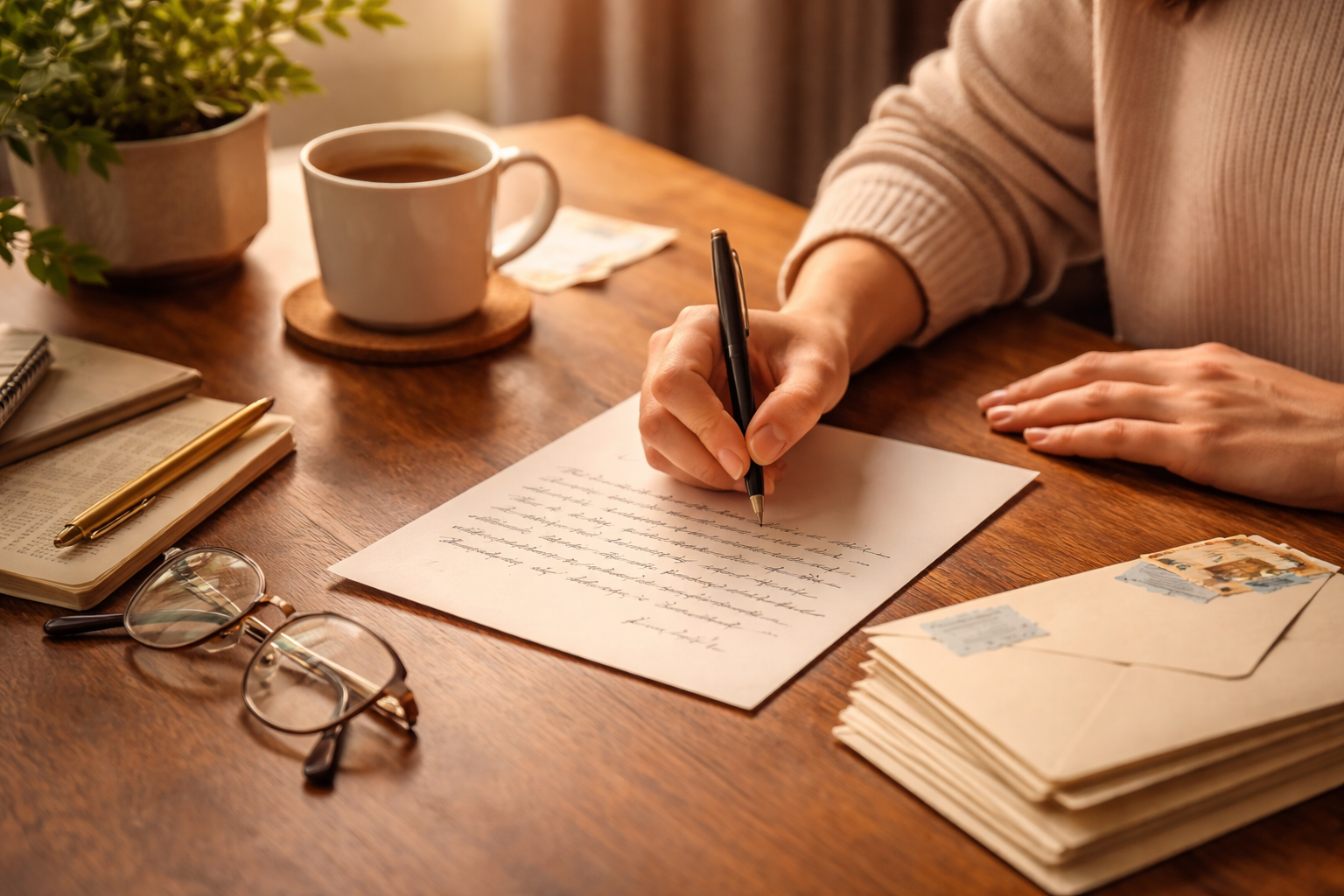
In a world of emails, messaging apps, and instant notifications, writing a physical letter can feel unfamiliar to many people. Yet letters still matter. They feel more intentional, more personal, and often more memorable than digital communication.
Whether you are writing to a friend, family member, former colleague, business contact, landlord, school, or organisation, a well-written physical letter has a unique impact. It shows effort. It slows communication down in a good way. And when written properly, it helps your message come across clearly and respectfully.
For many people, though, one question remains: how do you actually write a proper physical letter?
Do you need a formal structure? Where does the address go? How long should the message be? And how do you keep it clear without sounding cold?
This guide breaks it all down, from letter structure and envelope addressing to practical tips for writing clearly and concisely. It is designed for everyday people who want to send a letter that feels thoughtful, professional, and easy to understand.
Why Physical Letters Still Matter
A physical letter creates a different experience from a text or email. It is tangible. It can be opened, held, reread, and kept. That alone makes it more memorable.
Letters are still useful for many situations, including:
- personal messages that deserve more thought
- letters to old friends or relatives
- thank-you notes
- apology letters
- formal requests
- letters to businesses or organisations
- official correspondence
- special greetings and seasonal messages
Because a physical letter feels more deliberate, it often carries more emotional weight. That is one reason posted letters are still widely used for both personal and professional communication.
The Basic Structure of a Physical Letter
A good letter does not need to be complicated. In most cases, it should follow a simple and familiar structure.
Formal letter guidance commonly includes these parts: the sender’s address, the date, the recipient’s address, a salutation, the body of the letter, a closing, and a signature. Purdue OWL’s business letter guidance also recommends matching the salutation to the name used in the inside address and keeping the structure clean and readable.
Here is the basic structure:
1. Sender’s Address
This is your address, usually placed at the top of the letter.
In personal letters, this helps the recipient know where the letter came from and how to reply. In formal letters, it also gives the communication a proper structure.
2. Date
Add the date below your address.
This is useful for reference, especially in formal or important correspondence.
3. Recipient’s Address
Below the date, write the name and postal address of the person or organisation receiving the letter.
This section is sometimes called the inside address in formal letter writing.
4. Salutation
This is your greeting.
Examples include:
- Dear James,
- Dear Mrs Carter,
- Dear Customer Service Team,
- To Whom It May Concern:
For formal letters, Purdue OWL notes that using the same name as the inside address is standard practice, and a colon is traditional in formal business-style letters.
5. Opening Line
Start clearly. Say why you are writing.
This helps the recipient understand the purpose of the letter straight away.
6. Main Body
This is where you explain your message. Keep it organised and focused.
If the letter is short, one or two paragraphs may be enough. If it is more detailed, break it into short paragraphs so it remains easy to read.
7. Closing
End politely and naturally.
Examples include:
- Yours sincerely,
- Yours faithfully,
- Kind regards,
- Best wishes,
8. Signature and Name
If you are printing the letter, sign above your typed or written name. In a more personal letter, your first name may be enough. In a formal one, use your full name.
A Simple Letter Format You Can Follow
Here is an easy structure that works for most letters:
Your address
Date
Recipient’s name
Recipient’s address
Dear [Name],
Opening: Say why you are writing.
Middle: Explain the key message clearly.
Closing paragraph: End warmly or state what you would like to happen next.
Yours sincerely,
Your name
That is the core format. You do not need to overcomplicate it.
How to Address a Physical Letter Properly
Writing the letter itself is only one part of the process. The envelope matters too.
Royal Mail says you should write the address clearly on the front and include the postcode where possible. Its guidance also emphasizes using the full name, address, and postcode on the envelope or label.
For general envelope layout, postal services typically place:
- the return address in the top left
- the delivery address lower and more central on the front
- the postage or stamp in the top right
USPS guidance reflects the same general placement approach and states that the delivery and return addresses should appear on the same side of the envelope.
UK Addressing Tips
For UK mail, make sure:
- the recipient’s full name is included
- the building number and street are correct
- the town or city is included
- the postcode is accurate
- the writing is clear and easy to read
Royal Mail also provides postcode and address support tools because accurate addressing helps successful delivery.
International Addressing Tips
If you are sending a letter internationally, address formats vary by country. Royal Mail country guides show that postcode placement, city formatting, and country naming can differ depending on destination. For example, Greece and Ireland each use specific address formatting rules, and the destination country should be written clearly on the last line in capital letters. USPS also advises writing the destination country name on the last line in English for international mail.
That matters because even a well-written letter can face delays if the envelope is addressed incorrectly.
How to Convey Your Message Clearly
One of the biggest mistakes people make in letter writing is taking too long to get to the point.
A good letter should be clear from the start. The recipient should not have to guess why you are writing or what you want to say.
GOV.UK’s guidance on writing effective letters says letters should be structured simply and written as clearly and concisely as possible. NIH’s plain language guidance similarly says clear writing tells readers exactly what they need to know without unnecessary words.
Here are a few simple ways to do that:
Start With Purpose
Open with the reason for the letter.
Instead of circling around the point, say it early. For example:
- I am writing to thank you for your support.
- I wanted to check in and see how you have been.
- I am writing regarding the recent issue with my order.
- I wanted to send you a personal note after so much time.
This makes your letter easier to follow.
Keep One Main Focus
Every letter should have a main purpose. If you include too many unrelated points, the message can feel scattered.
If necessary, write a second letter later rather than trying to fit everything into one.
Use Short Paragraphs
Short paragraphs make letters easier to read. They also help the reader absorb each point without feeling overwhelmed.
Choose Simple Words
Plain language guidance consistently recommends everyday words over long or formal wording. GOV.UK and other official style guidance encourage plain English, short sentences, and avoiding jargon where possible.
For example:
- use help instead of assist
- use about instead of regarding when a simpler tone fits
- use start instead of commence
- use send instead of dispatch, unless formality is needed
Simple wording usually sounds more human and is easier to understand.
How to Keep a Letter Concise Without Losing Warmth
Being concise does not mean being cold. It simply means respecting the reader’s attention.
A concise letter says what it needs to say, clearly and sincerely, without adding filler.
That matters because readers are often busy, and official writing guidance repeatedly favors efficient communication. Purdue OWL notes that traditional letters often work best when information is presented efficiently for busy readers. Plain-language guidance from NIH also supports clear, direct wording with no unnecessary expressions.
Here are practical ways to stay concise:
1. Decide Your Core Message First
Before you write, ask yourself: what is the one thing I want this person to know, feel, or do?
That answer should shape the whole letter.
2. Avoid Repeating Yourself
If you have already made the point once clearly, you usually do not need to say it again.
3. Remove Unnecessary Introductions
You do not need long lead-ins like:
- I hope you do not mind me writing this letter to you today in order to say…
- I am writing this letter because I would like to let you know…
You can often shorten these to:
- I am writing to thank you…
- I wanted to say hello…
- I am writing about…
4. Leave Out Extra Detail That Does Not Help
Include details that support the message. Remove details that distract from it.
5. End Clearly
Do not let the letter drift at the end. Finish with a clear closing thought, next step, or warm sign-off.
Tips for Different Types of Physical Letters
Not every letter sounds the same. The tone should match the purpose.
Personal Letters
These can be warmer and more relaxed. You can be more natural, more conversational, and more expressive.
Professional or Formal Letters
These should still be clear and polite, but often slightly more structured. Keep the tone respectful and focused.
Sensitive Letters
If you are apologising, reconnecting after a long time, or discussing something emotional, clarity matters even more. Do not try to sound overly clever. Simplicity often feels more sincere.
Common Mistakes to Avoid
When writing a physical letter, try to avoid:
- making the opening too vague
- using a long, confusing first paragraph
- including too many topics in one letter
- writing overly long sentences
- sounding more formal than necessary
- forgetting key address details on the envelope
- leaving out the postcode
- using unclear handwriting if the letter is handwritten
Postal guidance stresses legibility and correct placement because these practical details affect delivery, not just presentation.
A Short Example of a Clear and Concise Letter
Here is a simple example:
12 High Street
London
12 April 2026
Mr Daniel Carter
45 King’s Road
Manchester
M1 2AB
Dear Daniel,
I hope you have been well. I wanted to write and say thank you again for your support during my move last month. Your help made a stressful week much easier.
I also wanted to check in and see how things have been with you. It has been a little while, and I thought it would be nice to reach out properly.
Wishing you all the best, and I hope to hear from you soon.
Best wishes,
Sarah
It is short, clear, warm, and easy to follow.
Why SendDoc Makes Physical Letter Writing Easier
Writing a good letter is one part of the process. Printing it, preparing the envelope, and posting it are the parts that often stop people from following through.
That is where SendDoc comes in.
SendDoc helps people send physical letters easily, without needing to print at home, buy envelopes, or visit the Post Office. Whether you are sending a personal message, a formal letter, a greeting, or professional correspondence, SendDoc helps turn your written words into real post.
That means you can focus on writing a letter that is clear, thoughtful, and memorable, while we help make sure it gets sent properly.
Final Thoughts
A physical letter does not need to be long or overly formal to be effective.
The best letters are usually the clearest ones. They follow a simple structure, use the correct address format, and say what they need to say in a direct but thoughtful way.
If you keep your message focused, use plain language, and address the envelope properly, your letter is far more likely to be read, understood, and remembered.
And when you are ready to send it, SendDoc makes the final step easy.